Call Me: (317) 721-3346

NFL Referee Calls
Football is a game of strategy, athleticism, and split-second decisions. While players and coaches receive most of the attention, referees play an equally important role in maintaining fairness and enforcing the rules.
NFL referee calls have become one of the most discussed aspects of professional football. From controversial pass interference penalties to questionable roughing-the-passer decisions, officiating can change the momentum of a game in seconds.
Understanding how referees make decisions, why penalties are enforced, and how instant replay works can help football fans better appreciate the complexities of NFL officiating.
What Are NFL Referee Calls?
NFL referee calls are decisions made by game officials to enforce the rules established by the National Football League. These decisions include identifying penalties, determining possession, confirming touchdowns, and ruling whether players remain in bounds.
An NFL officiating crew typically includes seven on-field officials, each responsible for monitoring specific areas of the field and different aspects of gameplay.
The referee leads the crew and announces penalties to players, coaches, and spectators. Other officials monitor offensive formations, defensive coverage, sideline activity, and player movements.
Because football involves multiple players moving at high speeds, officials must make immediate judgments while maintaining awareness of everything happening around them.
The Most Common Penalties During NFL Games
Several penalties occur regularly throughout an NFL season. Understanding these violations makes it easier to recognize why officials throw yellow flags.
1. Offensive Holding
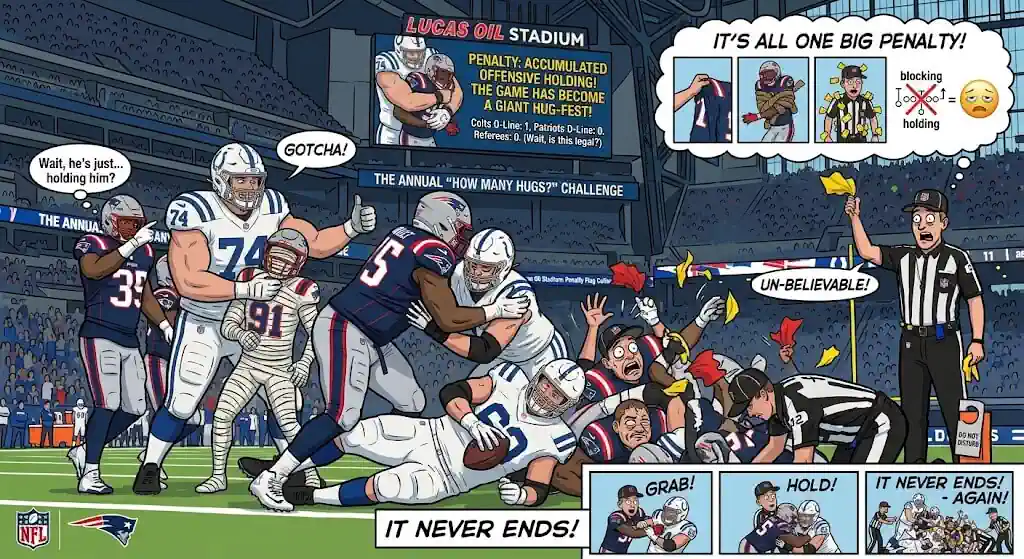
Offensive holding occurs when a player illegally restricts an opponent, often by grabbing or restraining a defender.
This penalty generally results in a 10-yard loss for the offensive team, subject to enforcement rules. Holding can erase significant gains and turn promising drives into difficult situations.
2. Defensive Pass Interference
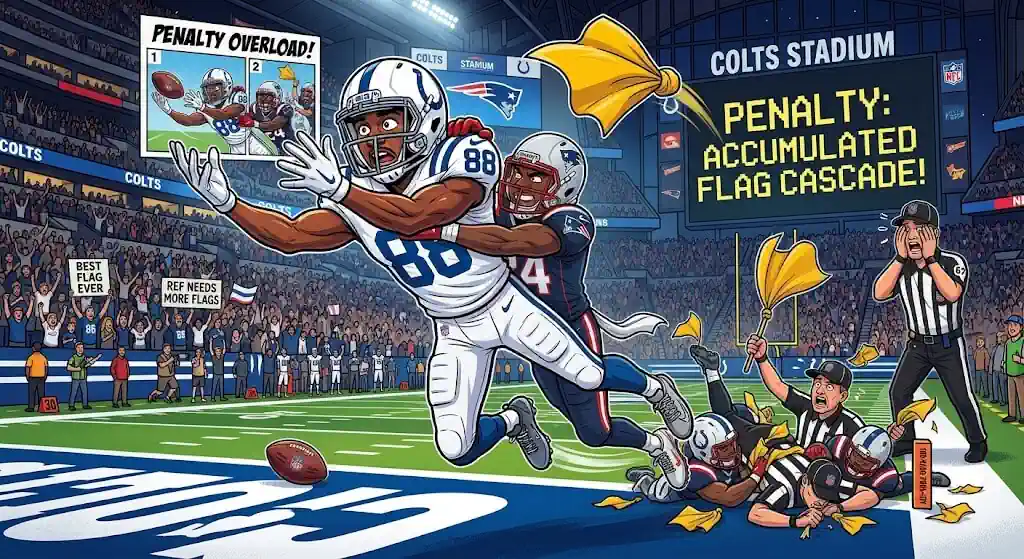
Pass interference is one of the most controversial NFL referee calls because it often involves subjective judgment.
Defensive pass interference occurs when a defender illegally interferes with an eligible receiver’s opportunity to catch a forward pass.
In the NFL, defensive pass interference generally results in an automatic first down, with the ball placed at the spot of the foul.
3. Roughing the Passer
Quarterbacks receive special protection under NFL rules, particularly when they are in a passing posture.
Roughing the passer may be called when a defender makes prohibited contact with the quarterback, including certain late hits or illegal contact to protected areas.
The penalty generally awards the offense 15 yards and an automatic first down.
4. False Start and Offside
A false start generally occurs when an offensive player illegally moves before the snap in a way that simulates the beginning of a play.
Offside occurs when a player is illegally positioned across the line of scrimmage at the snap.
Both violations commonly result in five-yard penalties, although enforcement depends on the circumstances.
Why NFL Referee Calls Become Controversial?
Controversy surrounding NFL referee calls often develops because football rules require officials to interpret actions occurring within fractions of a second.
Unlike certain violations that are relatively straightforward, other decisions involve judgment.
Determining whether a defender made incidental contact or illegally interfered with a receiver can be challenging.
Camera angles, player positioning, and game speed can influence how a particular play appears.
Fans watching television frequently have access to slow-motion replays from multiple perspectives, while on-field officials must initially make decisions in real time.
Another major source of controversy involves consistency. When similar plays receive different rulings, fans may question whether officiating standards are being applied equally.
How Instant Replay Helps Officials Make Decisions!
To determine whether your household receives the best tap water in the United States, start by checking the latest report from your local water supplier. Statewide reputations cannot tell you exactly what is coming out of your kitchen faucet.
Use these steps to investigate your drinking water:
- Find your water provider: Identify the utility that supplies your home.
- Read the annual report: Review the Consumer Confidence Report for information about sources, testing, and detected regulated contaminants.
- Check for violations: Look for reported compliance problems and follow any instructions from your utility.
- Test private wells: Arrange testing through a qualified laboratory if your home uses a private well.
- Investigate plumbing: If your home has older pipes, ask about potential lead or copper exposure.
- Choose filters carefully: Select a certified filter designed to reduce the specific contaminant you are concerned about.
The Environmental Protection Agency (EPA) provides information about Consumer Confidence Reports, also known as annual drinking water quality reports. Visit the EPA Consumer Confidence Report website to find information about your local water supply.
Private wells are generally not covered by the federal regulations that apply to public water systems. Testing recommendations may vary according to local geology and nearby land use.
If your water changes color, develops an unusual odor, or is covered by a boil-water advisory, contact your water provider or local health department for guidance. Follow official instructions before using the water for drinking or cooking.
Final Thoughts
Choosing the best tap water in the United States requires more than looking at state rankings or natural scenery. Hawaii, Oregon, Vermont, Minnesota, and New Hampshire have water resources worth exploring, but no state can guarantee that every community and household has identical water quality.
Reliable drinking water depends on protected sources, effective treatment, maintained infrastructure, and regular monitoring. Reviewing your local water report is one of the most practical ways to understand your household’s supply.
Clean drinking water is a valuable public resource. By protecting watersheds, maintaining pipes, improving treatment facilities, and testing water regularly, communities can help safeguard their supplies for current residents and future generations.