Call Me: (317) 721-3346

Breast Types: The 12 Most Common Shapes
Breasts come in many shapes, sizes, and variations. This guide breaks down the most common breast types, helping you understand your natural shape, embrace your body, and learn what makes each type unique.
Breasts are one of the most diverse parts of the human body, and no two people have the exact same shape. In fact, doctors and women’s health experts emphasize that there is no single “normal” breast type—every variation is natural and healthy. In this guide, we’ll explore the most recognized breast types so you can better understand your own body, choose supportive bras, and appreciate the beauty of natural variation.
Why Breast Types Matter
Knowing your breast types can help you find bras that fit comfortably, understand natural asymmetry, improve body confidence, and recognize normal changes over time. Breast shape is influenced by genetics, weight, age, hormones, and pregnancy, and each person’s anatomy tells a unique story.
1. Archetype (Standard Shape)
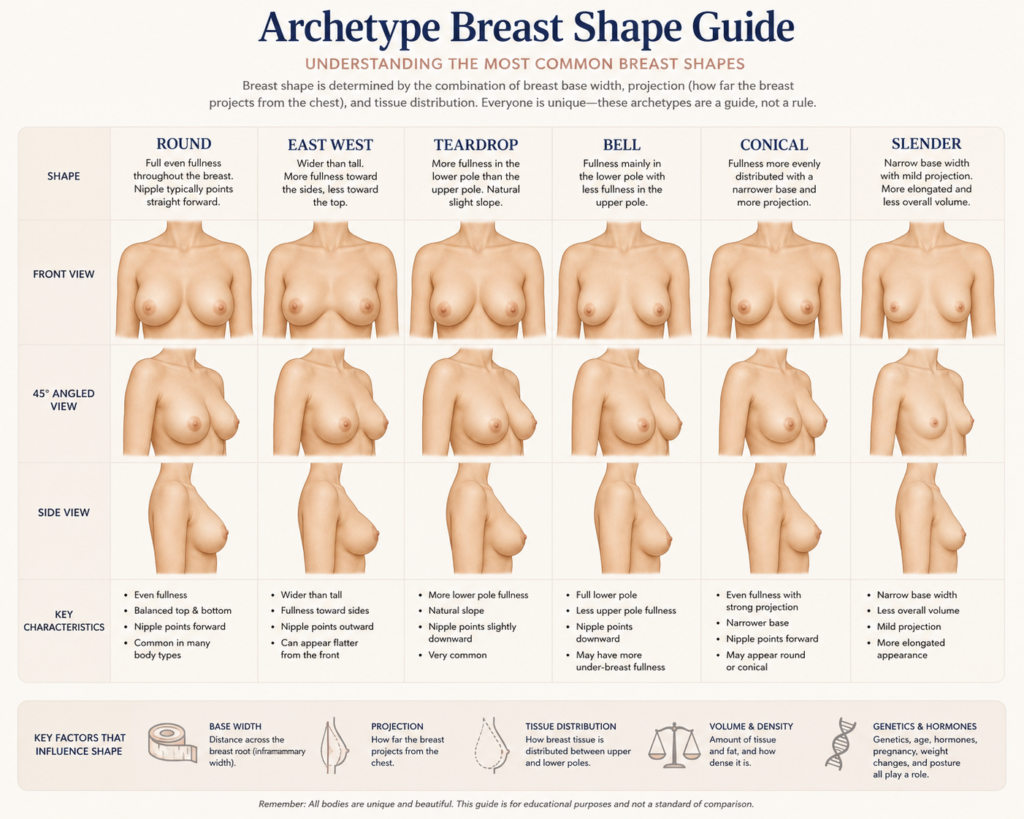
The archetype shape is often considered the “classic” example used in bra manufacturing because it represents a balanced, proportional form. Breasts with this shape have even fullness throughout the top and bottom, creating a naturally rounded silhouette with a gentle forward projection. The nipple typically sits centered and slightly pointed, giving the breast a soft, natural contour. Among all breast types, this one is the most commonly referenced because it fits easily into most bra styles without requiring specialized support. Women with this shape often find that their breast tissue distributes evenly, making it easier to achieve a smooth look under clothing.
2. Asymmetrical
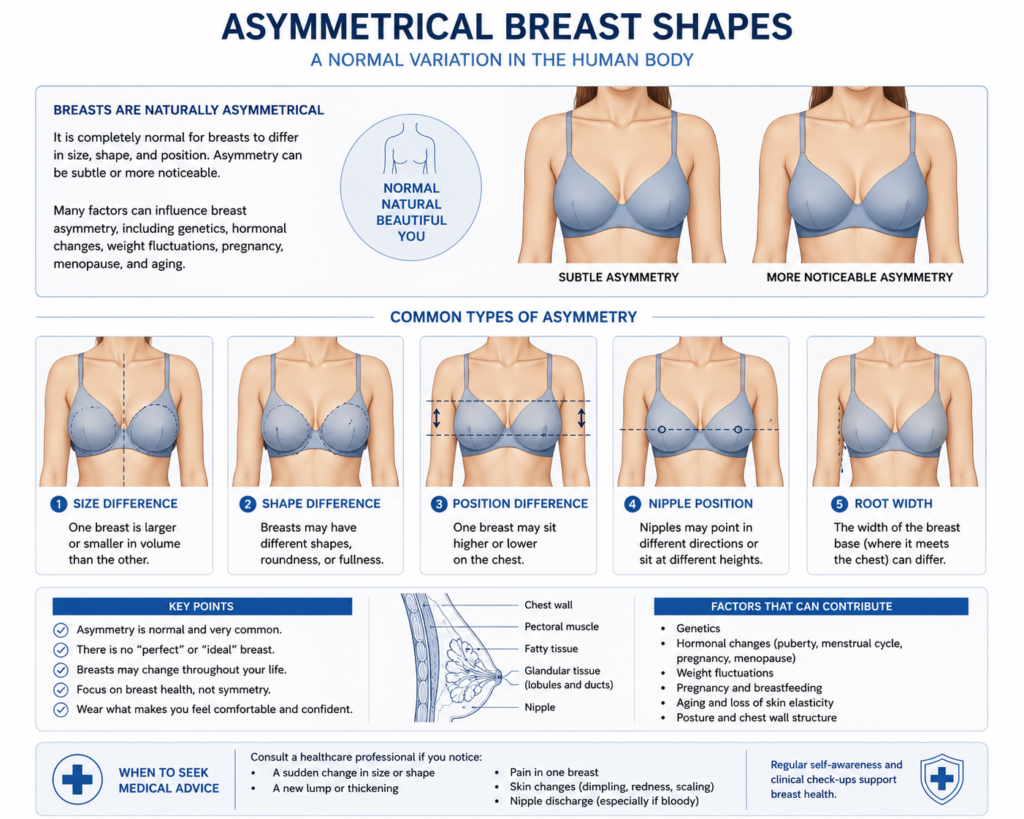
Asymmetrical breasts are extremely common, with one breast naturally larger, fuller, or shaped differently than the other. This variation can be subtle or noticeable, and it occurs in more than half of all women. Asymmetry can be influenced by genetics, hormonal changes, or natural differences in tissue density. Among breast types, asymmetrical breasts are one of the most misunderstood, yet they are completely normal and not a sign of any health issue. Many women with this shape choose bras with removable padding so they can adjust the appearance if desired, but asymmetry itself is simply a natural part of human anatomy.
3. Athletic
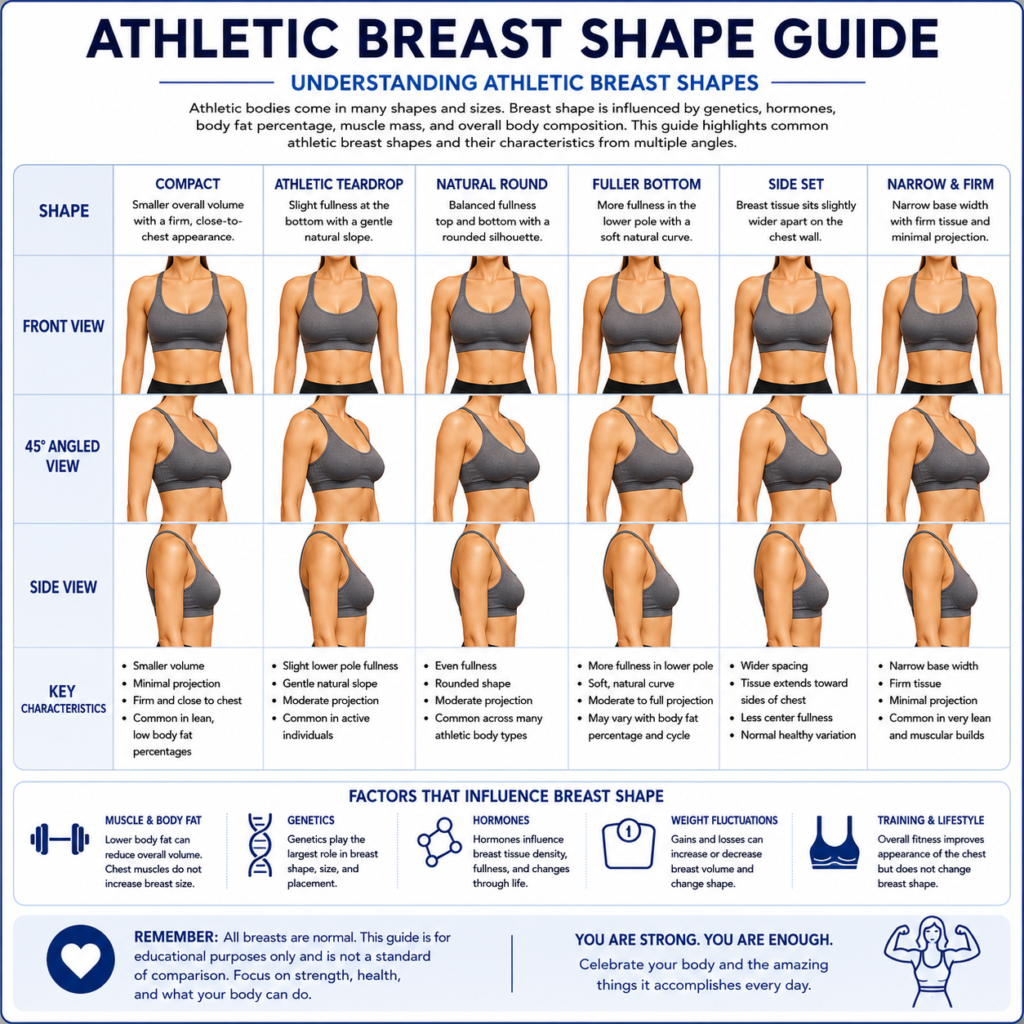
Athletic breasts tend to have a wider, more compact appearance due to having more muscle and less fatty tissue. This shape often appears firmer and flatter against the chest wall, with a subtle forward projection rather than a rounded fullness. Women with athletic breast types may notice that their breasts maintain shape well during movement, but they may also find that certain bra styles feel too loose or gape at the top. This shape is common among individuals with strong pectoral muscles or lower body fat percentages. Athletic breasts benefit from bras that contour the chest without relying solely on padding.
4. Bell Shape
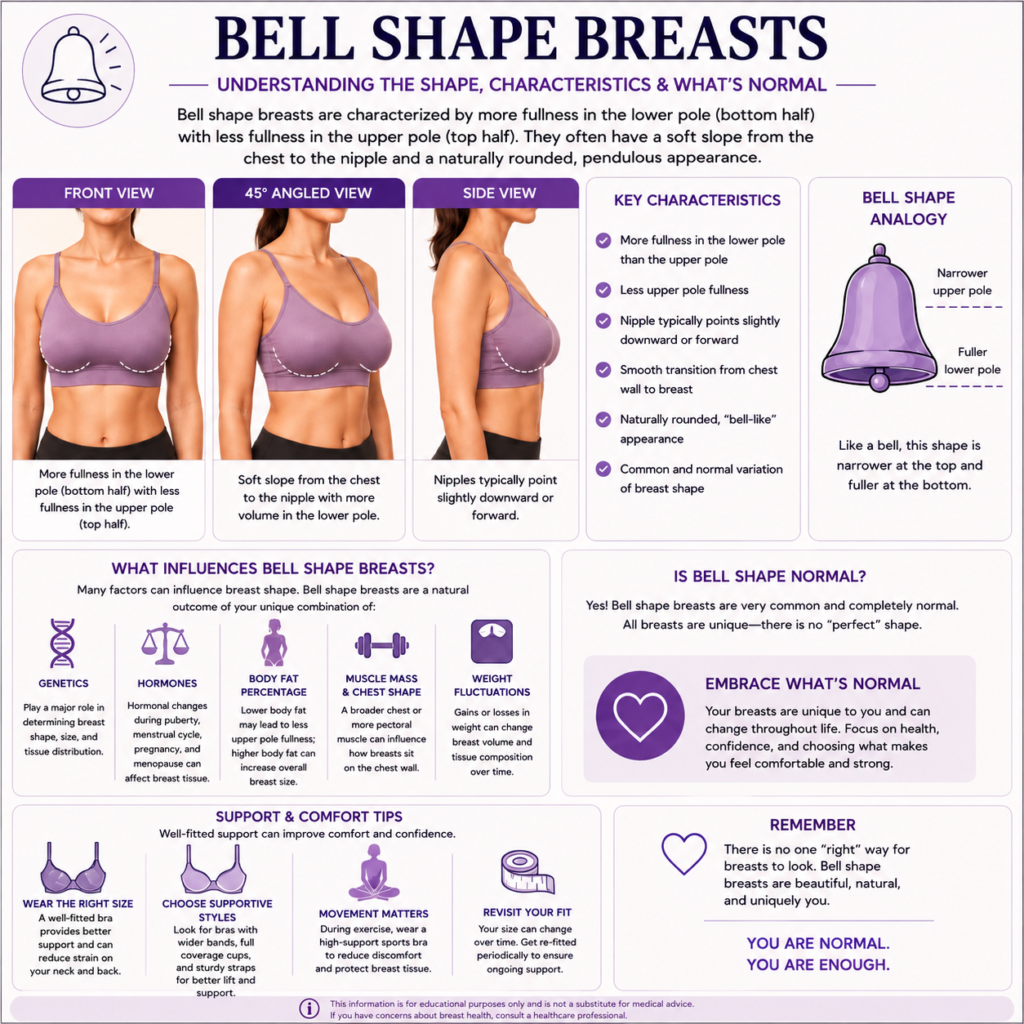
Bell-shaped breasts are narrower at the top and gradually become fuller toward the bottom, creating a silhouette similar to a traditional bell. This shape is especially common in larger cup sizes because breast tissue naturally settles downward with weight and gravity. Among breast types, bell-shaped breasts often require supportive bras with structured cups or underwire to maintain lift and comfort. The top portion may appear softer or less full, while the bottom has a rounder, heavier appearance. This shape is completely natural and can change over time due to age, pregnancy, or hormonal shifts.
5. Close Set
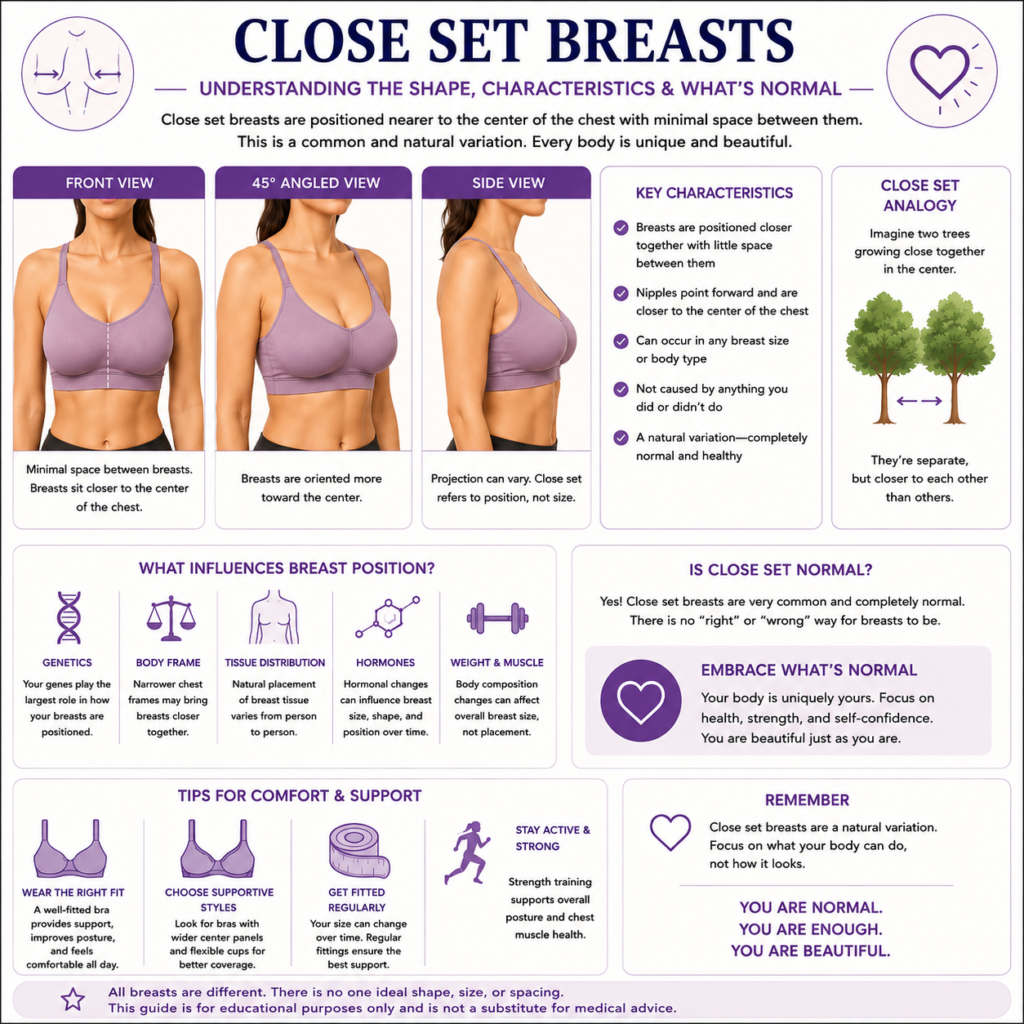
Close-set breasts sit near the center of the chest with very little space between them, creating a naturally defined cleavage even without a push-up bra. Women with this breast type may notice that bras with wide center panels feel uncomfortable or don’t sit flat. Close-set breasts often have a forward projection and can appear fuller in the middle of the chest. This shape is common among individuals with narrower ribcages or naturally centered breast tissue. Choosing bras with a narrow gore (the center piece between cups) helps ensure a comfortable and supportive fit.
6. Conical
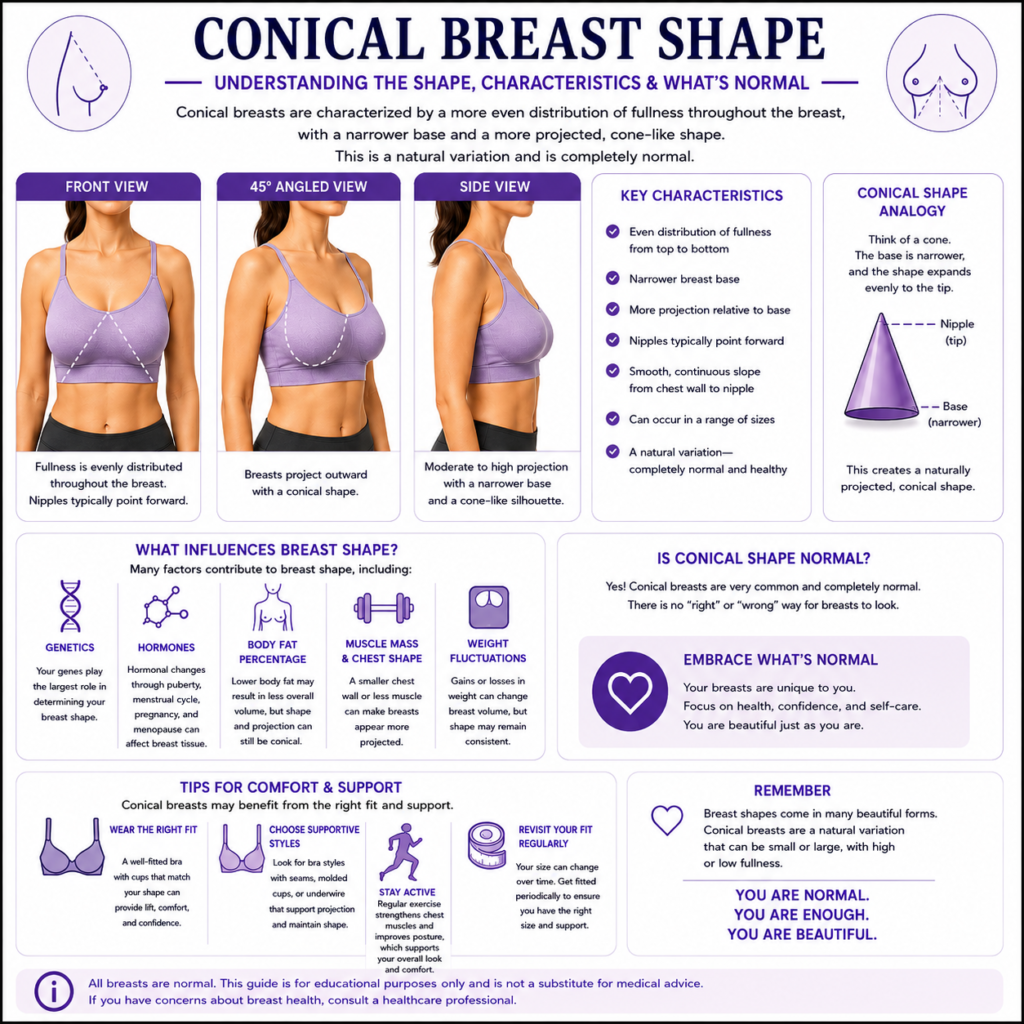
Conical breasts have a more tapered shape, resembling a cone rather than a rounded mound. This shape is often seen in smaller breast sizes, where the tissue projects forward without significant fullness at the top or sides. Among breast types, conical breasts are unique because they may appear more pointed, especially in unlined bras. This shape is completely normal and can be influenced by genetics or natural tissue distribution. Many women with conical breasts prefer bras with lightly padded or molded cups to create a rounder silhouette, though the natural shape is perfectly healthy and functional.
7. East-West
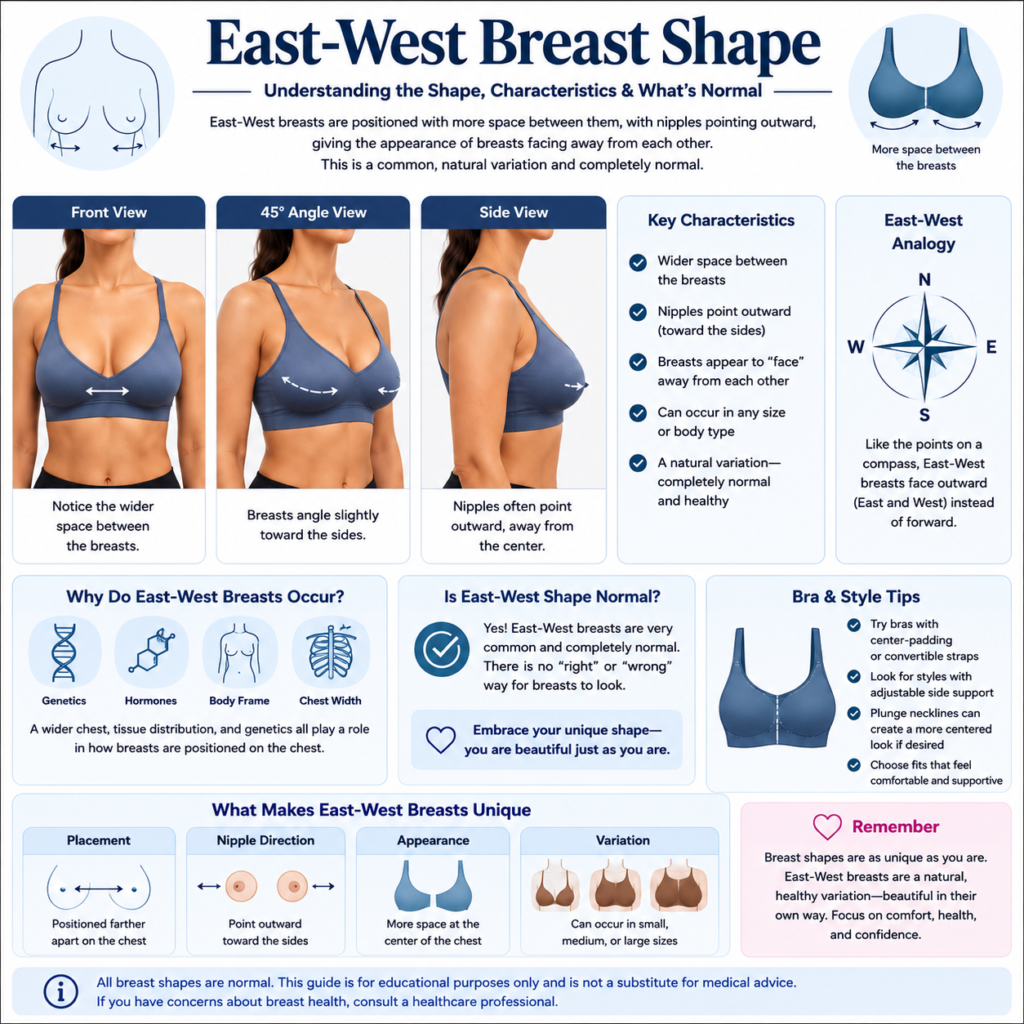
East-west breasts have nipples that point outward in opposite directions, giving the breasts a wider appearance across the chest. The tissue may naturally pull toward the sides, creating space in the center. This breast type is common and not a sign of any medical concern. Women with east-west breasts may find that certain bra styles help bring the tissue inward for a more centered look, while others allow the natural outward orientation. This shape can occur due to genetics, chest structure, or natural tissue placement. It is one of the most recognizable breast types because of its distinct nipple direction.
8. Relaxed
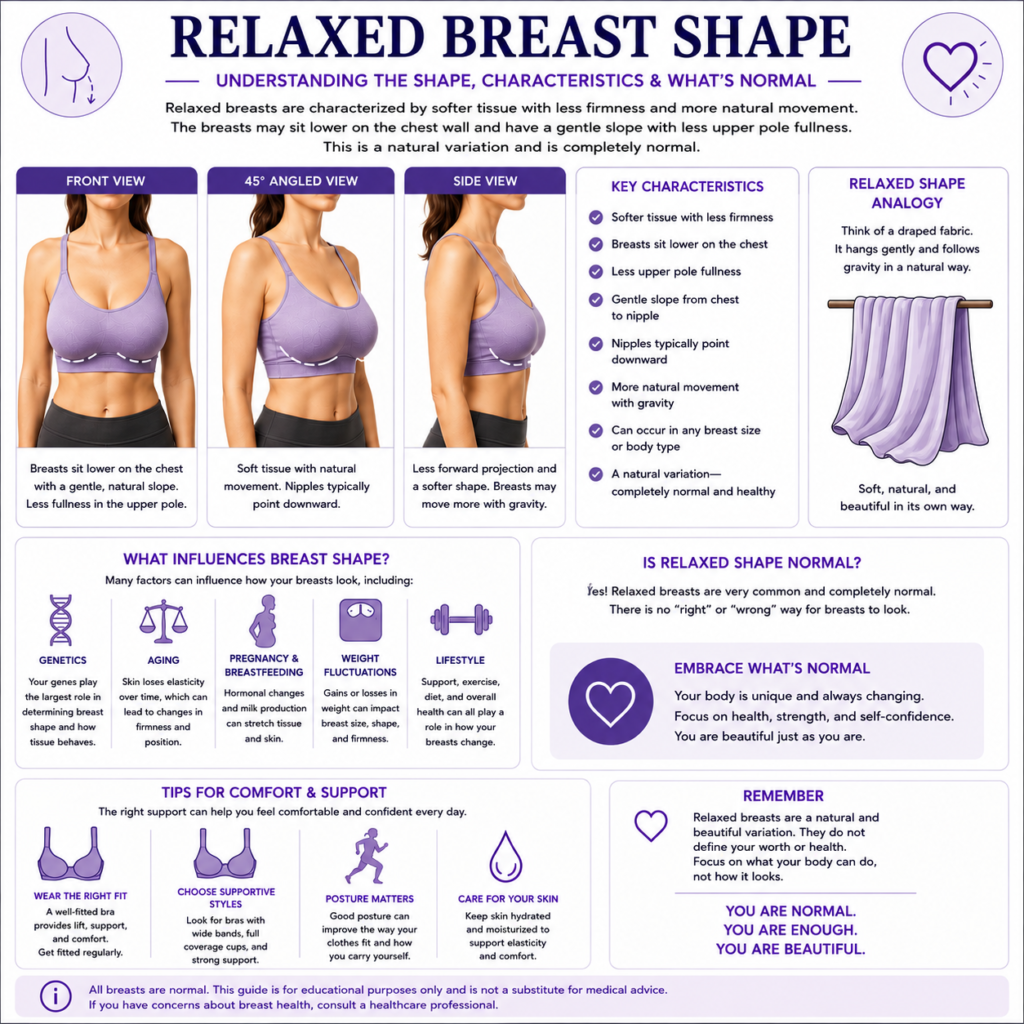
Relaxed breasts have looser tissue and downward-pointing nipples, giving them a softer, more elongated appearance. This shape is common with age, weight changes, or after breastfeeding, but it can also be present naturally. Among breast types, relaxed breasts often benefit from supportive bras that lift and shape the tissue comfortably. The relaxed structure does not indicate any health issue; it simply reflects the elasticity of the skin and ligaments. Many women with this shape prefer bras with full-coverage cups or side support to maintain a smooth silhouette.
9. Round
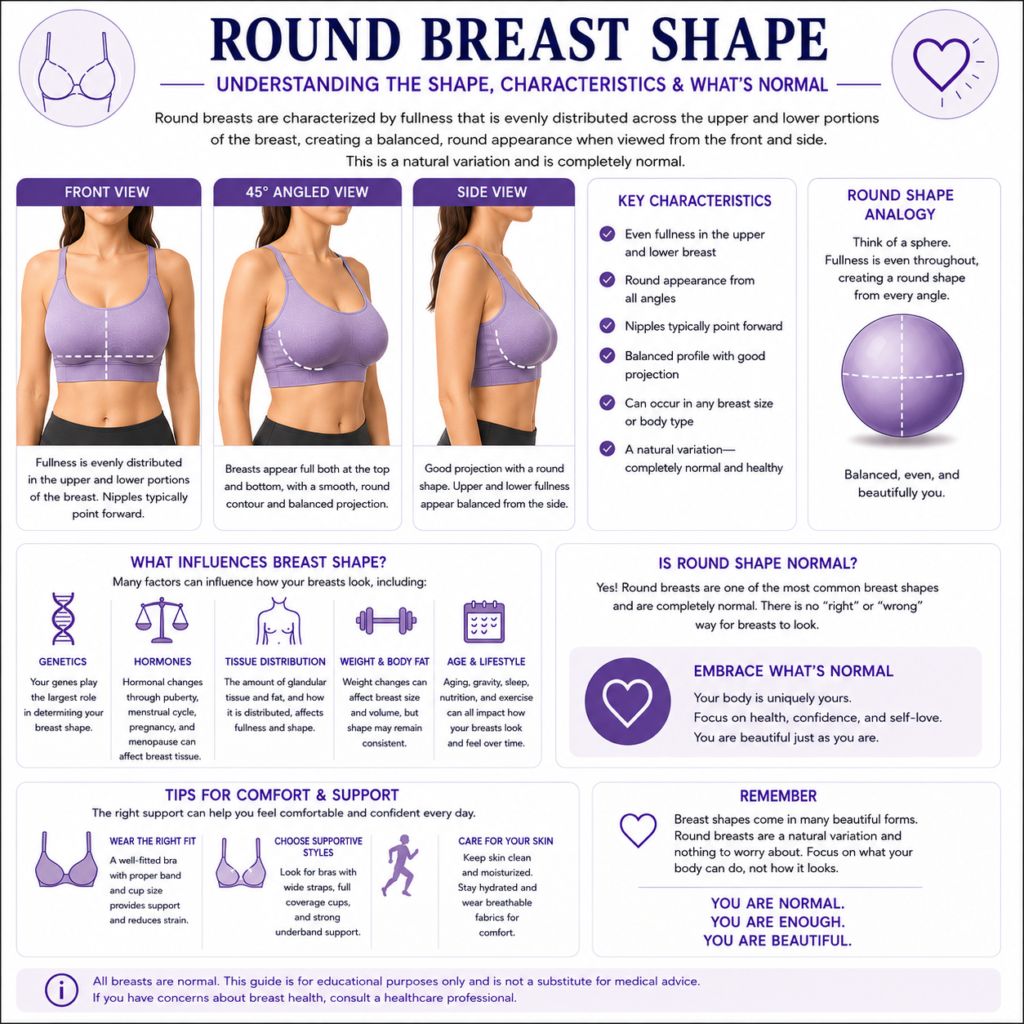
Round breasts have even fullness at both the top and bottom, creating a naturally circular shape. This breast type often appears lifted and full without the need for additional padding. Round breasts typically project forward and maintain their shape well in most bra styles. Because of their balanced distribution, they are considered one of the easiest shapes to fit. Women with round breasts may notice that their cleavage forms naturally and that bras with minimal structure still provide a flattering shape. This type is often associated with dense breast tissue.
10. Side Set
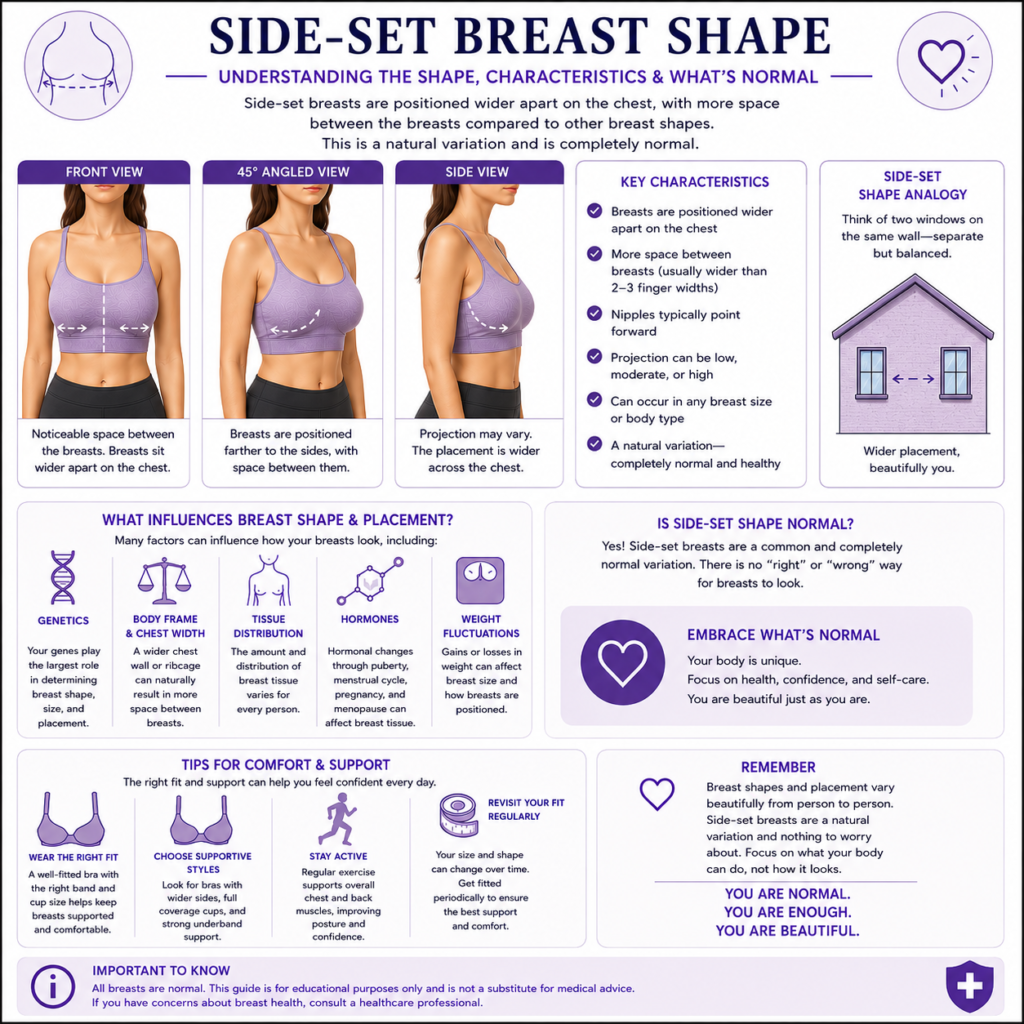
Side-set breasts sit farther apart on the chest, leaving more space in the center. The nipples usually point forward rather than outward, but the tissue itself rests toward the sides. This breast type creates a wider chest appearance and may make cleavage less pronounced without a supportive bra. Women with side-set breasts often benefit from bras with inward-pulling side panels or cups designed to gather tissue toward the center. This shape is influenced by ribcage width, genetics, and natural tissue placement. It is one of the most common breast types among individuals with broader chests.
11. Slender
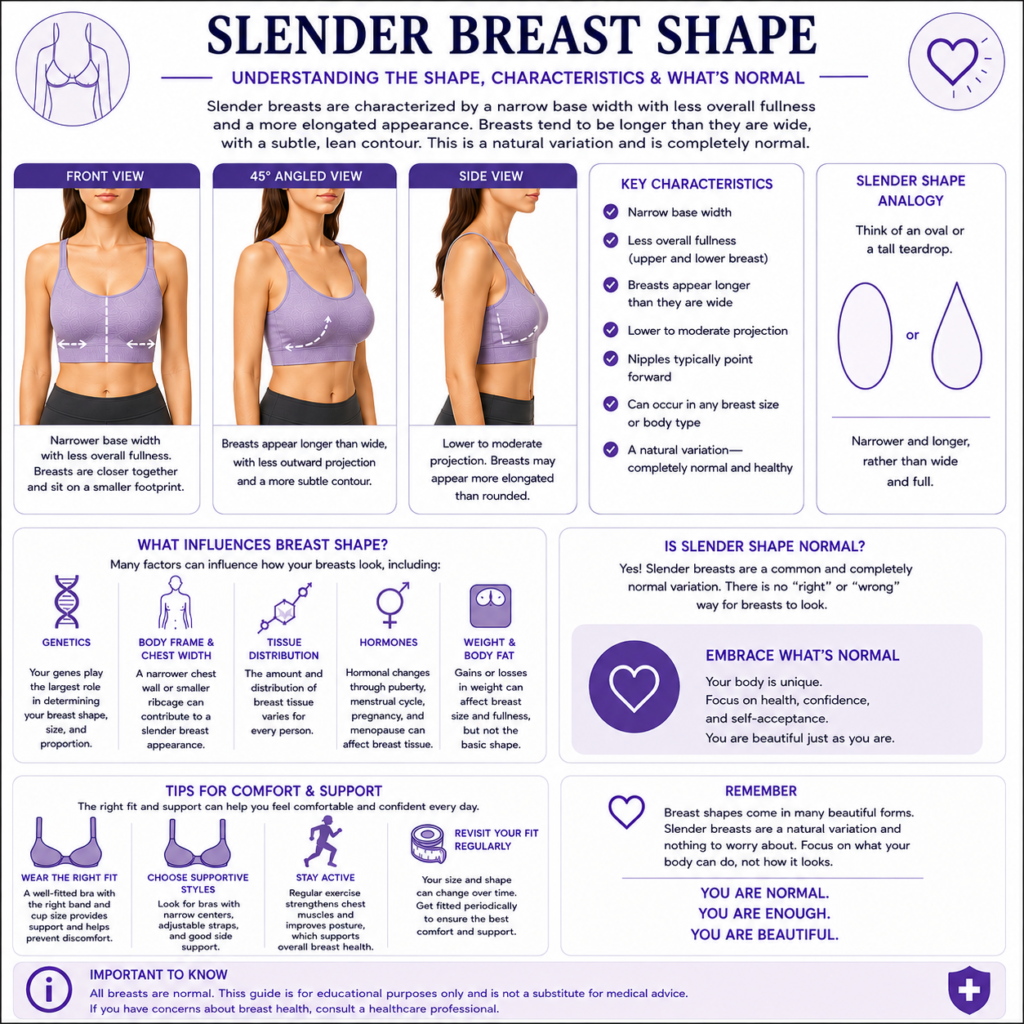
Slender breasts are narrower, longer, and often smaller in size. They typically have less fullness at the top and may feature downward-pointing nipples. This breast type is common among individuals with lower body fat or naturally elongated tissue. Slender breasts may appear more relaxed or less rounded, but they are completely healthy and normal. Many women with this shape prefer bras with contour cups or gentle padding to create a fuller appearance, though the natural shape is perfectly functional. Slender breasts often fit well in bras designed for smaller sizes.
12. Teardrop
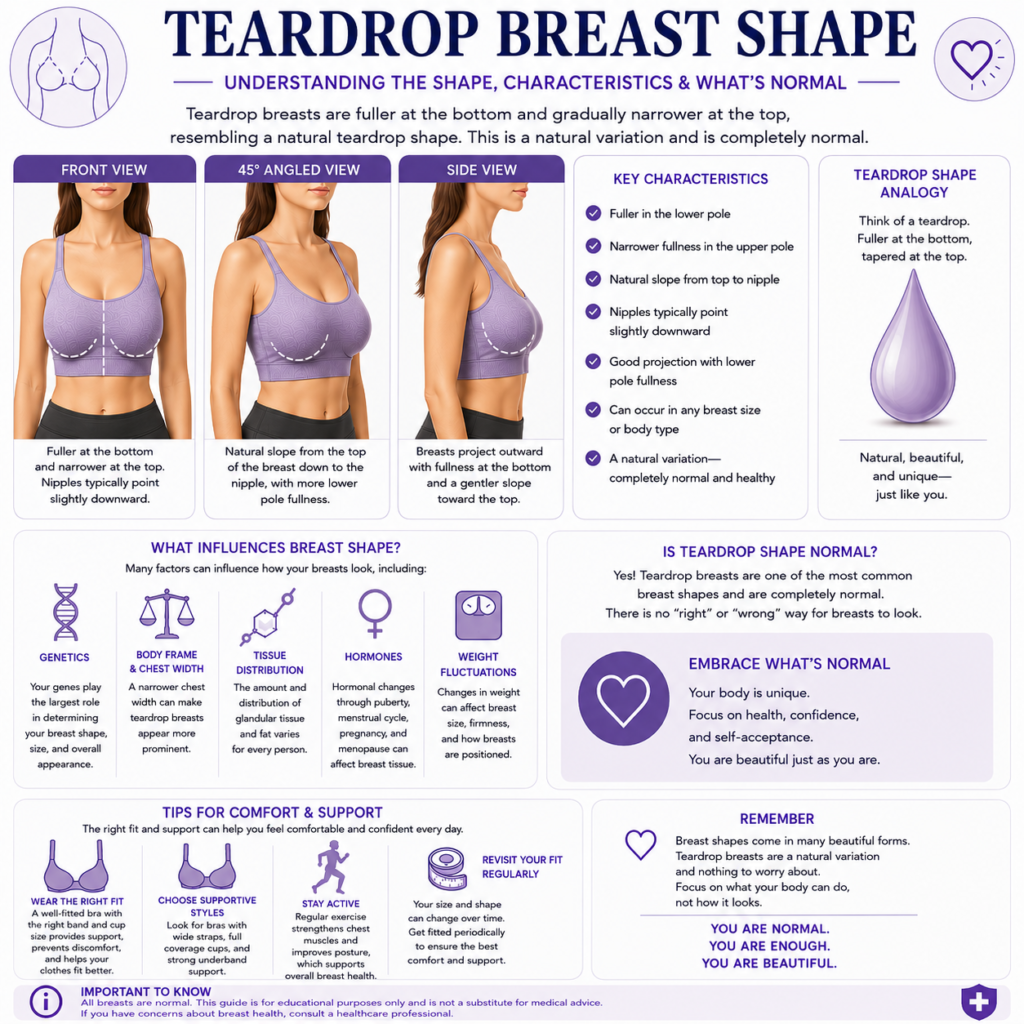
Teardrop breasts combine characteristics of round and bell shapes. They are slightly slimmer at the top and fuller at the bottom, creating a soft, natural slope. This breast type is one of the most common and is often considered aesthetically balanced because of its gentle curvature. Teardrop breasts project forward without appearing overly round, making them compatible with nearly all bra styles. The shape can change slightly over time due to hormonal shifts, pregnancy, or age, but the overall teardrop silhouette remains consistent. Many women find this shape easy to fit and comfortable in everyday bras, making it one of the most versatile breast types.
Final Thoughts
Understanding your breast types is a powerful step toward genuine body confidence. When you recognize that every shape—round, teardrop, asymmetrical, bell, athletic, or slender—exists naturally across millions of women, it becomes easier to appreciate your own body without comparison or judgment. Your breasts tell a story shaped by genetics, age, hormones, motherhood, weight changes, and life experiences. None of those factors diminish beauty; they simply make you human.
Every variation is normal, every contour is valid, and every shape is uniquely yours. The more you learn about your natural form, the easier it becomes to choose clothing that fits comfortably, bras that support you properly, and styles that make you feel confident rather than self‑critical. Most importantly, understanding your shape helps you let go of unrealistic expectations created by airbrushed photos, push‑up bras, and carefully staged marketing images.
Real bodies are diverse. Real breasts are imperfect. And that’s exactly what makes them beautiful. Embrace your natural form, honor the changes it goes through, and remember: perfection only exists in marketing—not in real bodies, and certainly not in yours.