
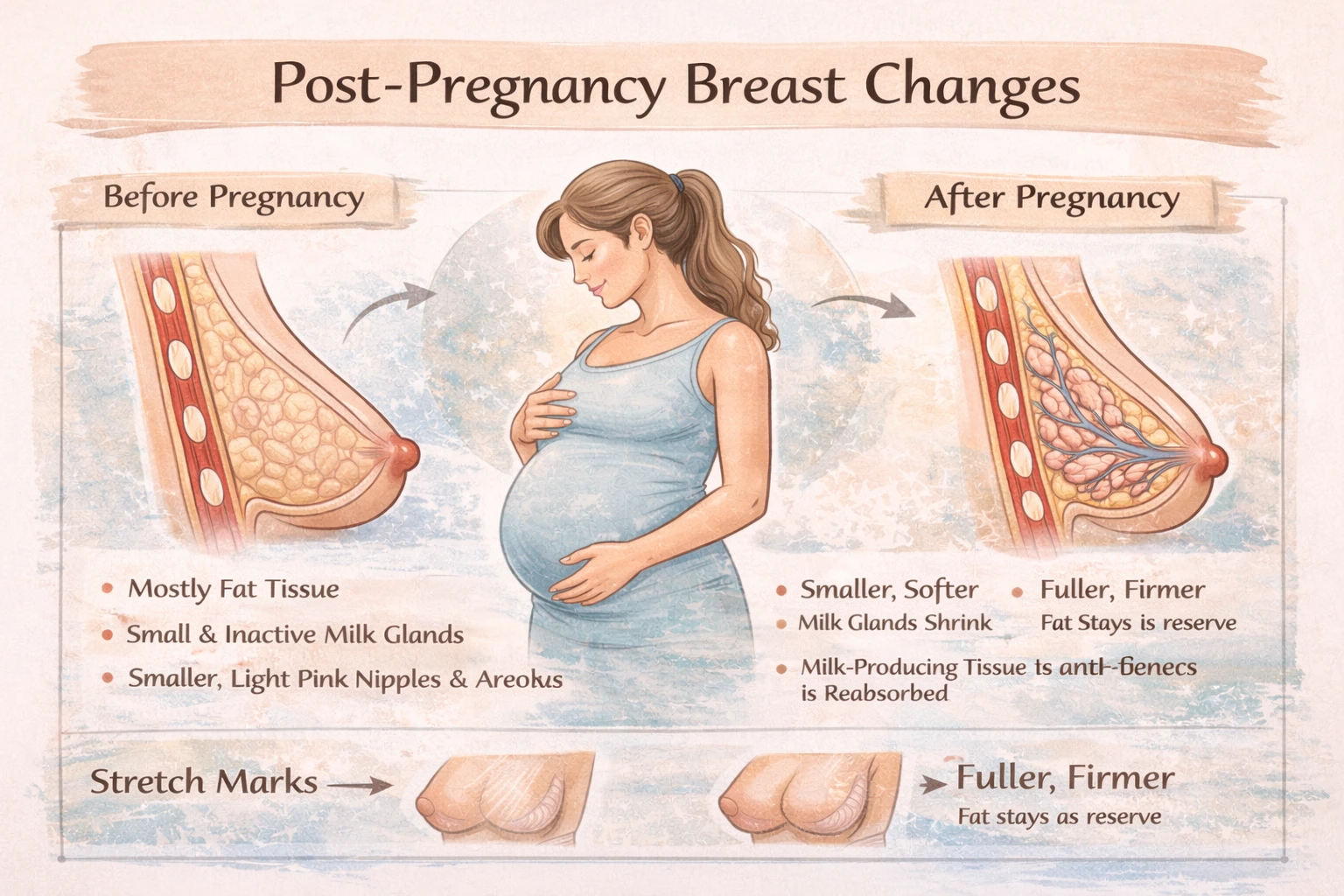
How Women’s Breasts Change During Pregnancy: Growth, Asymmetry, and Stretch Marks
Pregnancy is a time of profound change for the body, and the breasts are among the most dynamic areas. From early hormonal shifts to milk production preparation, understanding these changes can help expectant mothers know what’s normal, why one breast may grow more than the other, and why stretch marks appear and fade.
Breast Growth During Pregnancy
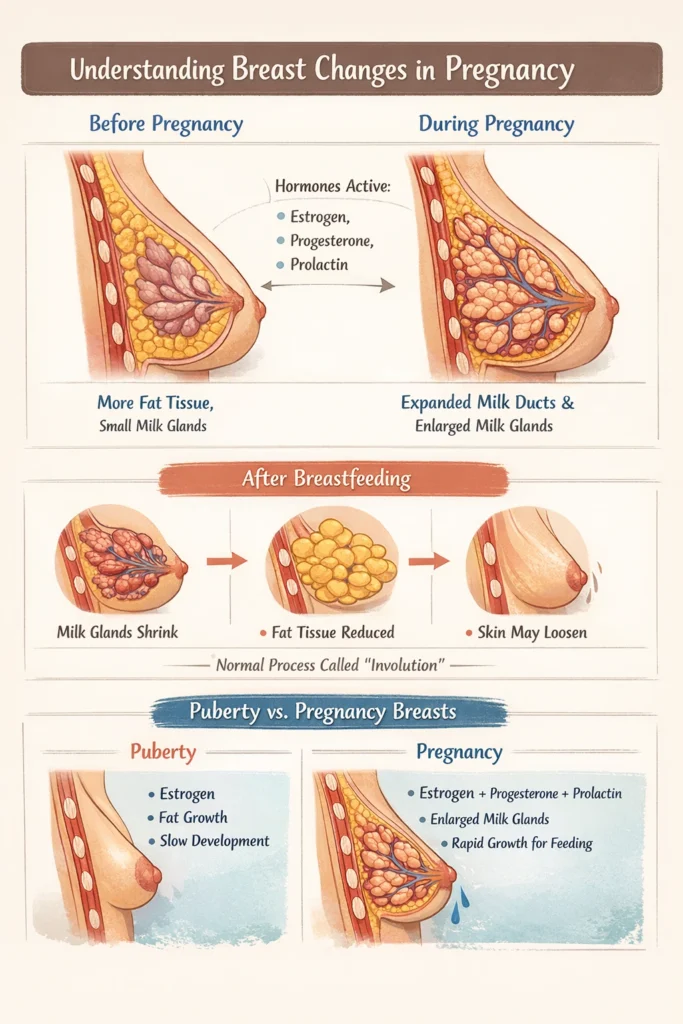
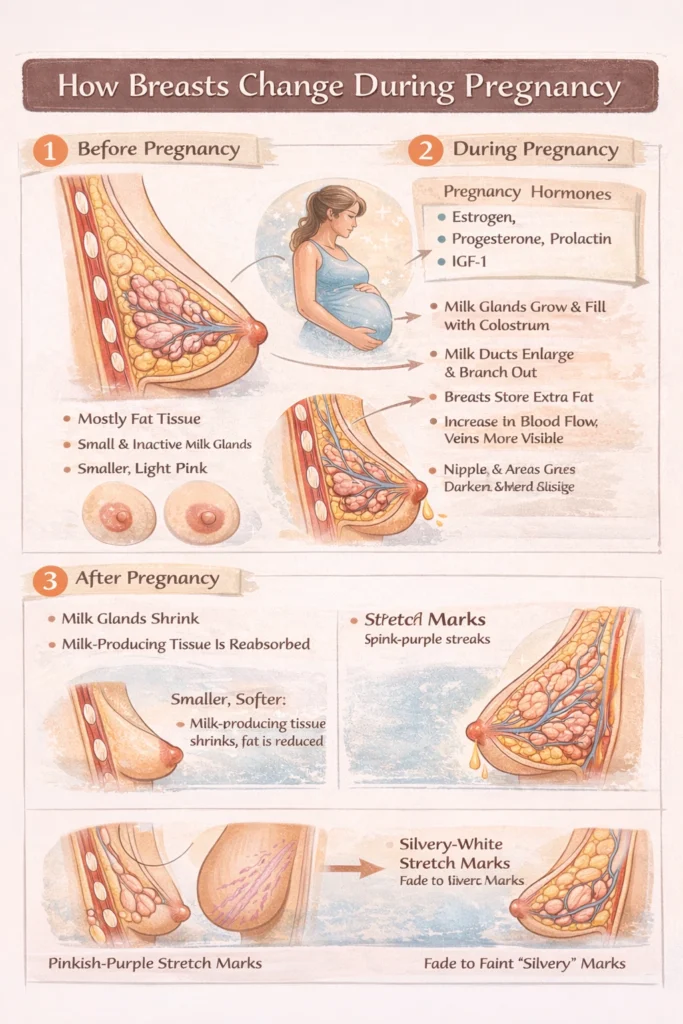
From the very beginning of pregnancy, a woman’s body prepares for breastfeeding. Hormones such as estrogen, progesterone, and prolactin trigger significant changes in breast tissue:
- Milk ducts multiply and branch out to carry milk.
- Lobules (milk-producing glands) enlarge to prepare for lactation.
- Fat tissue increases to provide cushioning and energy reserves.
- Blood flow increases, making veins more visible.
These changes lead to larger, firmer, and sometimes more sensitive breasts. Growth often starts early in the first trimester and can continue until after birth, especially when milk “comes in.”
Why One Breast May Grow More Than the Other
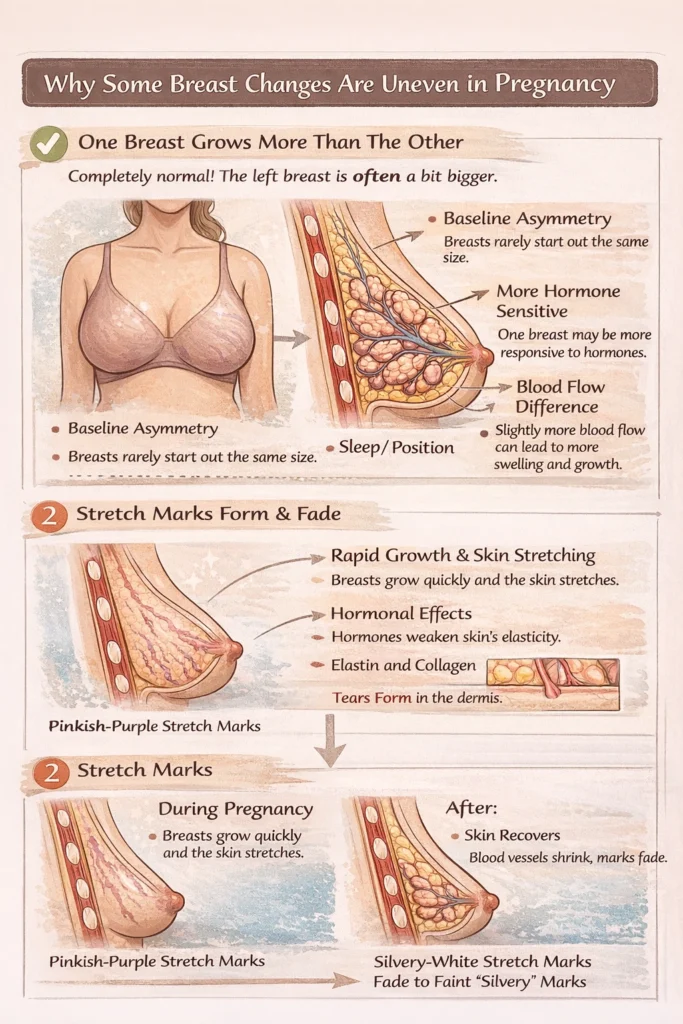
Many women notice that one breast grows slightly faster than the other. This is completely normal. Factors contributing to uneven growth include:
- Baseline asymmetry: Breasts rarely start out the same size.
- Hormone sensitivity: One breast may respond more strongly to hormonal signals.
- Blood flow differences: Slightly more circulation in one breast can promote growth.
- Sleeping positions: Favoring one side can influence minor growth differences.
Even if the size difference seems noticeable, it typically evens out over time, though small differences may remain.
Stretch Marks: Why They Happen and How They Fade
Stretch marks, also called striae gravidarum, are a common result of rapid breast growth:
- Skin stretches quickly as the underlying tissue expands.
- Collagen and elastin fibers tear slightly, creating visible lines.
- Hormones like estrogen and cortisol reduce skin elasticity, increasing susceptibility.
During pregnancy, stretch marks often appear pink, purple, or reddish. Over time, as the skin recovers and blood vessels shrink, these marks fade to silvery-white lines. While they may not disappear completely, they become much less noticeable.
Post-Pregnancy Changes
After childbirth and breastfeeding:
- Milk glands shrink and milk-producing tissue is partially reabsorbed.
- Breasts may return close to their original size, remain slightly larger, or become softer.
- Skin elasticity gradually improves, reducing the prominence of stretch marks.
These changes are completely normal and are part of the body’s natural adjustment after pregnancy and lactation.
Takeaway
Breast changes during pregnancy — from growth to asymmetry to stretch marks — are normal, temporary, and functional. Understanding the underlying biology can ease concerns and help women embrace the natural transformations their bodies undergo.

I’m a creative professional specializing in web design, movie reviews, audio editing, and photo editing—blending visual storytelling, sound, and critique to deliver engaging digital experiences.